
Every Detour Leads Home
What happens when every escape route leads back to you.

“The future becomes a kind of religion. Tomorrow becomes the promised land. We sacrifice the present to it continuously.”
There comes a point when every escape route starts to look suspiciously familiar. You change cities. You change jobs. You change partners. You bury yourself in books, alcohol, productivity systems, spiritual practices, political convictions, expensive hobbies, and grand plans for the future. Each one arrives dressed as a solution. Each one promises a fresh start. Yet somehow, after all the movement, you find yourself standing in the same place. The scenery changes, but the central problem remains. You are still there.
This realization lands with a particular kind of cruelty because it destroys one of our favorite fantasies: the belief that salvation is elsewhere. We imagine that if we could only rearrange the circumstances correctly, if we could just find the right relationship, the right city, the right philosophy, the right version of ourselves, then the unease would finally leave. But the unease has a habit of traveling. It rides shotgun. It follows you across oceans and through reinventions. You arrive at your destination only to discover that the thing you were fleeing has already unpacked its bags.
Most people spend years trying to outrun this fact. Entire industries are built around helping them do so. We have become masters of distraction. Whenever discomfort appears, we immediately reach for something to drown it out. Entertainment. Self-improvement. Consumption. Achievement. The modern world offers an endless supply of exits. What it rarely offers is a reason to stay in the room.
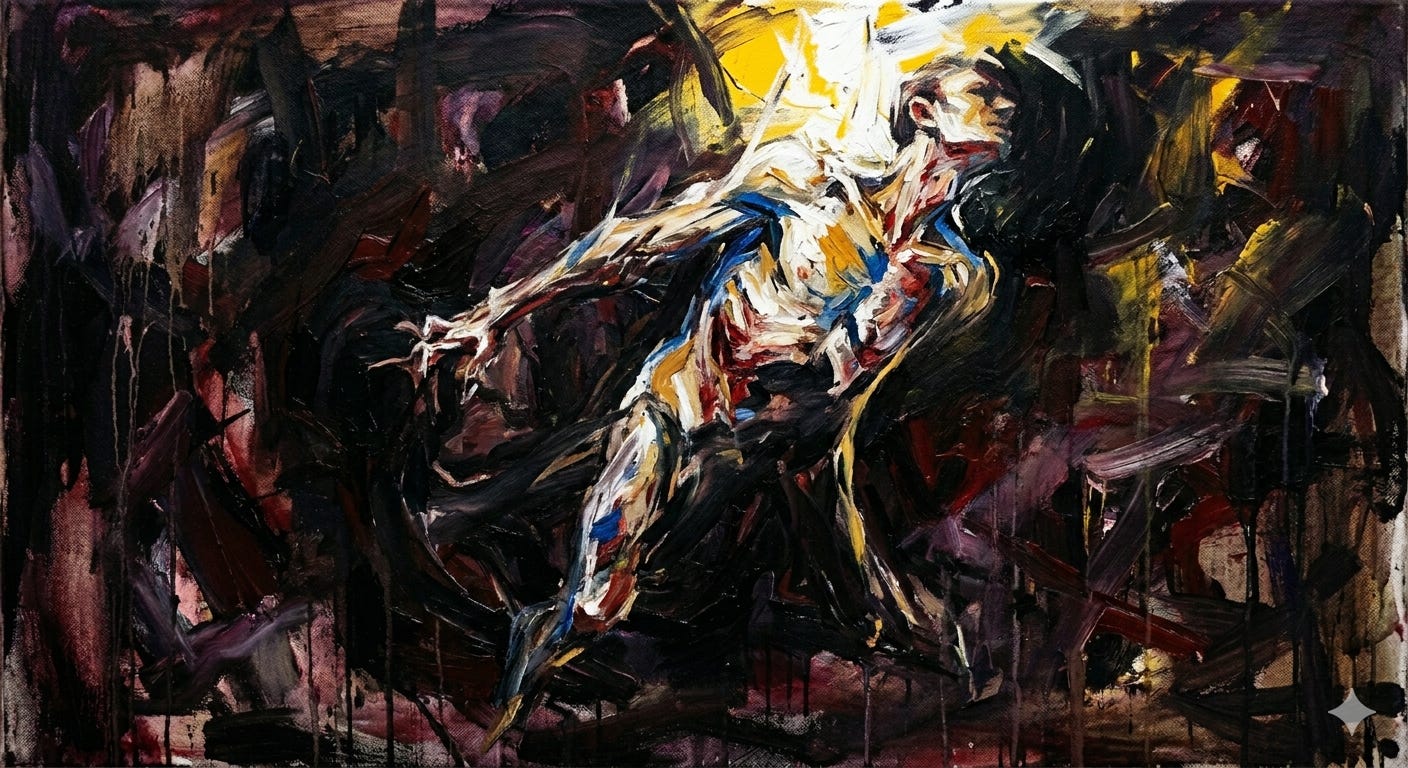
Eventually, though, something strange happens. Not enlightenment. Not healing. Exhaustion. You become tired of managing yourself. Tired of diagnosing yourself. Tired of endlessly attempting to optimize your way out of being human. You discover that every detour eventually circles back to the same territory. The roads become shorter. The loops become tighter. The tricks stop working. And because there is nowhere left to run, you find yourself doing something unusual.
You stop.
You sit quietly with the thing you have been avoiding.
At first, this feels like defeat. The sadness remains. The confusion remains. The questions remain. Yet something else begins to reveal itself. The world is still happening. Your breath continues without asking permission. Light still enters the room. Sounds drift through the window. Cars pass. Birds chatter. The floor remains beneath your feet. Life continues its business without consulting your opinion of it.
And because you have finally exhausted your ability to interfere, you begin to watch.
Not in some mystical sense. Not as a spiritual achievement. Simply as a person who has run out of alternatives.
There is a peculiar freedom in this. Most of our suffering comes not from pain itself but from our endless attempts to negotiate with reality. We are constantly trying to strike deals with existence. I’ll be happy when. I’ll be peaceful once. I’ll feel whole after. The future becomes a kind of religion. Tomorrow becomes the promised land. We sacrifice the present to it continuously.
The problem is that tomorrow never arrives.
When it gets here, it changes its name to today.
Then it slips away again.
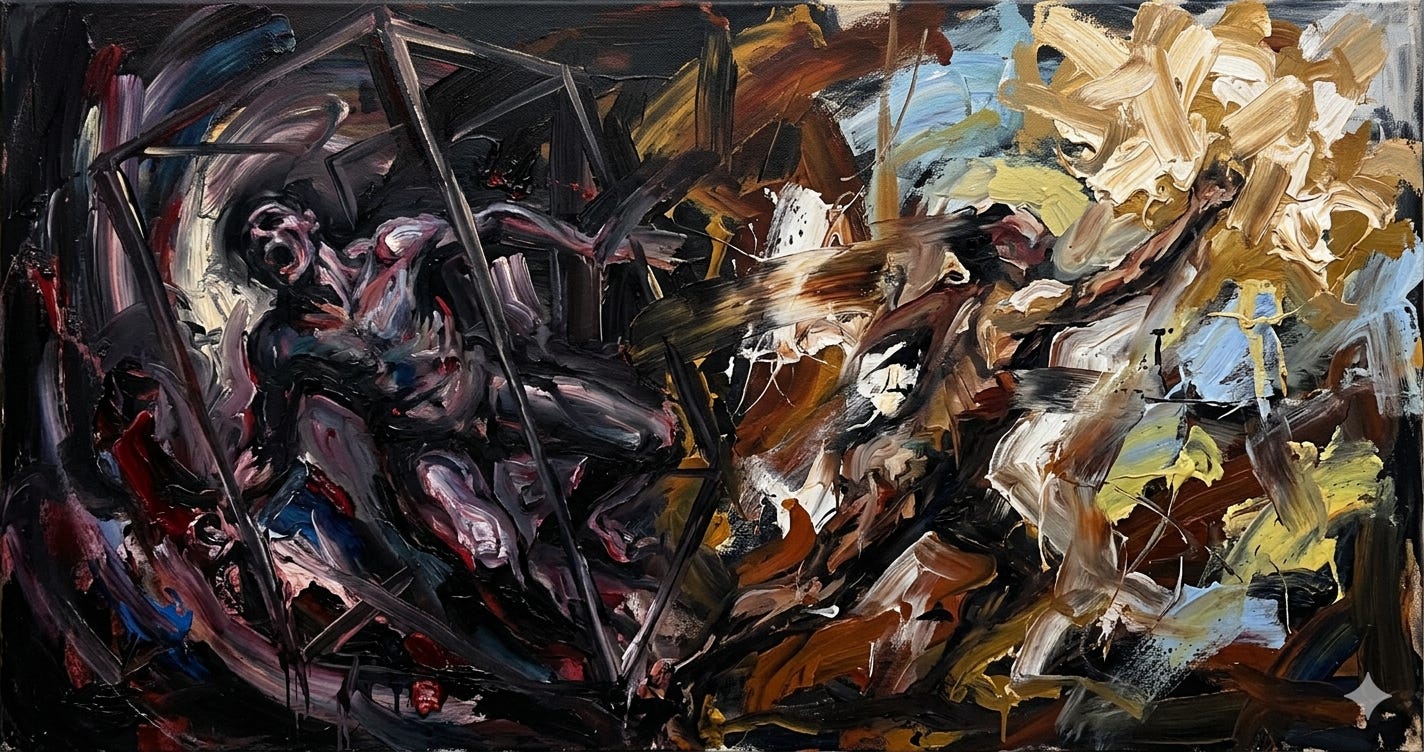
Human beings spend decades chasing a horizon that retreats with every step. The future exists largely as imagination. The past exists largely as memory. Yet these are the places where we spend most of our lives. We are rarely where reality is actually occurring.
The irony is that many people discover this truth and immediately turn it into another project. They become ambitious about presence. Competitive about enlightenment. They approach spirituality with the same mindset they once brought to career advancement. The ego simply changes costumes.
This is one of the oldest jokes in human history.
A person decides they will eliminate their ego. They dedicate years to the task. They meditate longer than everyone else. They suffer more heroically than everyone else. They become extraordinarily proud of how humble they are. The self appoints itself head of the anti-self committee.
The whole thing becomes absurd.
The ego wants to disappear, but it wants credit for disappearing.
It wants applause on the way out.
This is why some of the most self-conscious people you will ever meet are those trying hardest to transcend themselves. They are engaged in a battle they cannot win because the thing doing the fighting is the thing they are trying to defeat.
You cannot outmaneuver yourself.
You cannot become egoless through force of will any more than you can extinguish a fire with additional fire.
The ambition itself contains the trap.
Curiously, the people who are most honest about their selfishness often end up being easier to live with. They tell you what they want. They tell you what they don’t want. They say no when they mean no. They make no effort to appear saintly. Because of this, they become predictable. You always know where you stand.
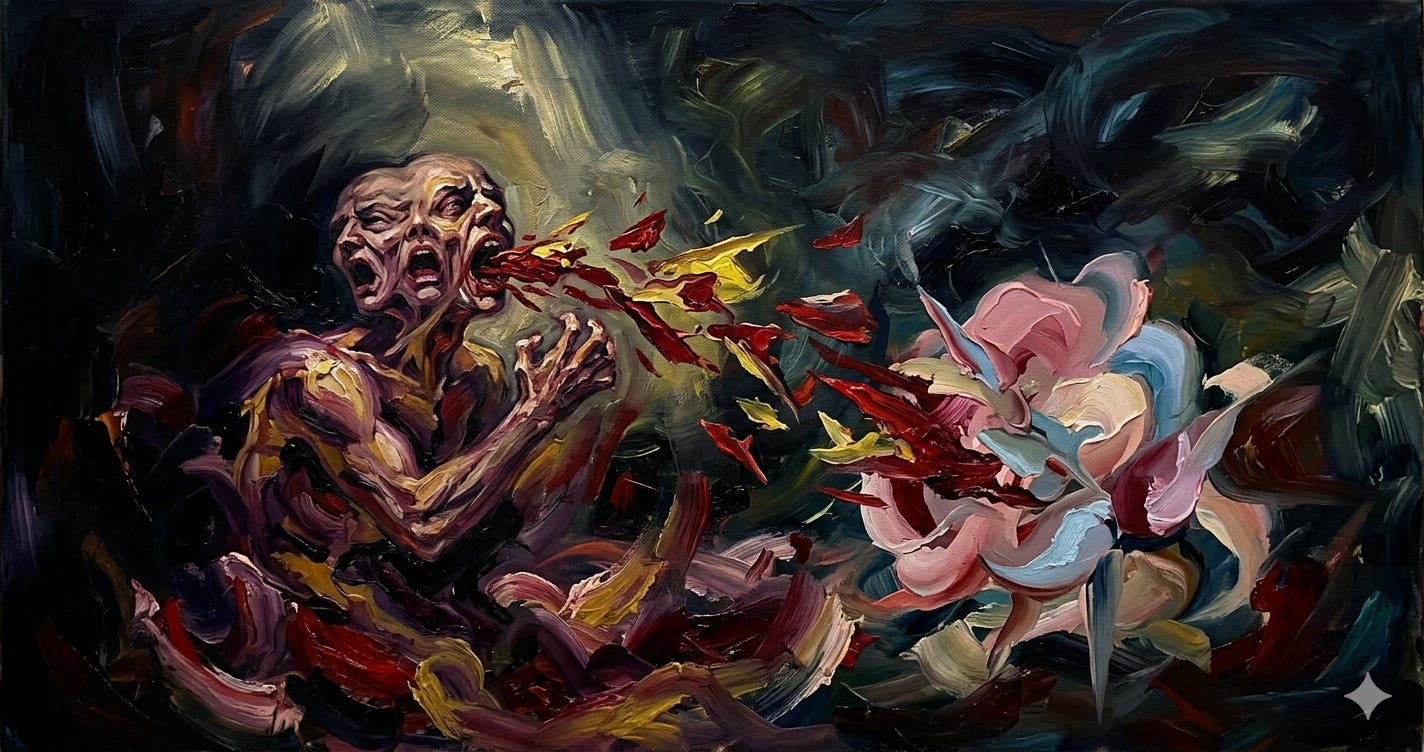
There is a strange kindness in straightforwardness.
Imagine asking someone for a favor. One person says yes immediately, eager to appear generous, only to resent you later, avoid you, or quietly fail to follow through. Another person says no without apology. Which one has actually respected you more?
Most people fear disappointing others so much that they create far greater disappointments in the long run. They soften reality until it becomes deceptive. They offer promises they cannot keep. They manufacture obligations they secretly hate. They become prisoners of their own image.
A clean refusal is often kinder than false hope.
An honest no is often more loving than a dishonest yes.
Yet many people would rather be perceived as good than actually behave truthfully.
Perhaps this is why the ambition to become a saint is so dangerous. It encourages performance. It encourages self-deception. It tempts people into constructing an idealized version of themselves and then defending that image at all costs. The result is often a person who appears virtuous but has become completely alienated from reality.
Reality is rarely interested in our ideals.
Reality is interested in what is true.
And what is true is usually much simpler than we imagine.
You are here.
Life is happening.
Your thoughts are passing through like weather.
Your memories are shadows.
Your plans are guesses.
The future is uncertain.
The past is gone.
And the person you are trying so desperately to become is preventing you from meeting the person you already are.
Maybe wisdom begins when the project finally collapses. Not the project of growth, but the project of becoming some perfected version of yourself. Maybe maturity is less about improvement and more about honesty. Less about transcendence and more about participation. Less about escaping the human condition and more about inhabiting it fully.
Because when all the distractions fail, when all the philosophies exhaust themselves, when every detour circles back to the beginning, you are left with something surprisingly ordinary.
This moment.
This breath.
This strange and temporary experience of being alive.
And perhaps that was the destination all along.
"The person you are trying so desperately to become is preventing you from meeting the person you already are."
This is the kind of writing that reminds me why I read. Not just information, but connection and genuine reflection.
The answer truly is: just stop ✋